PNP Transistor High-Side Switch with an LED
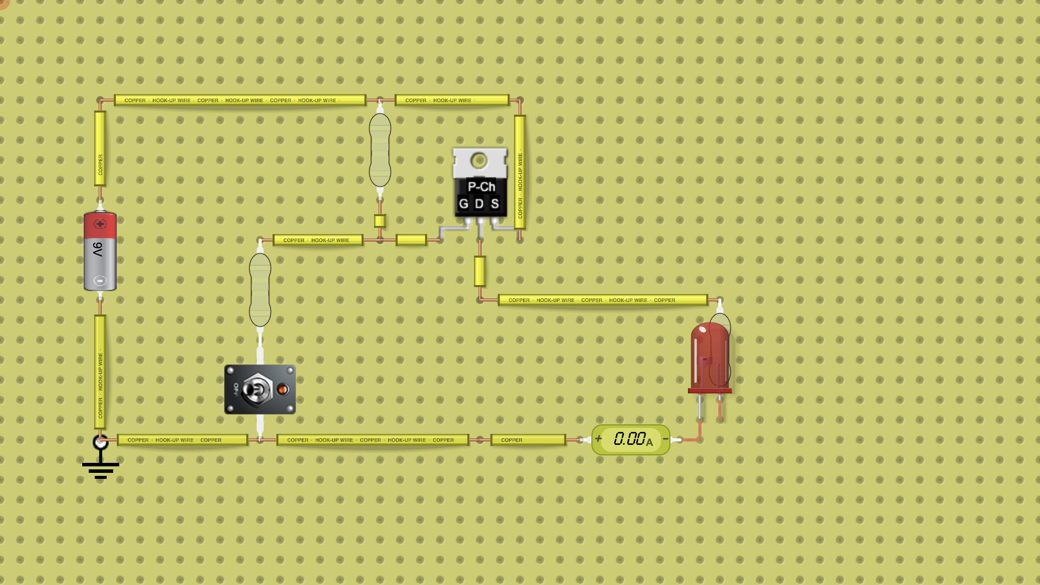
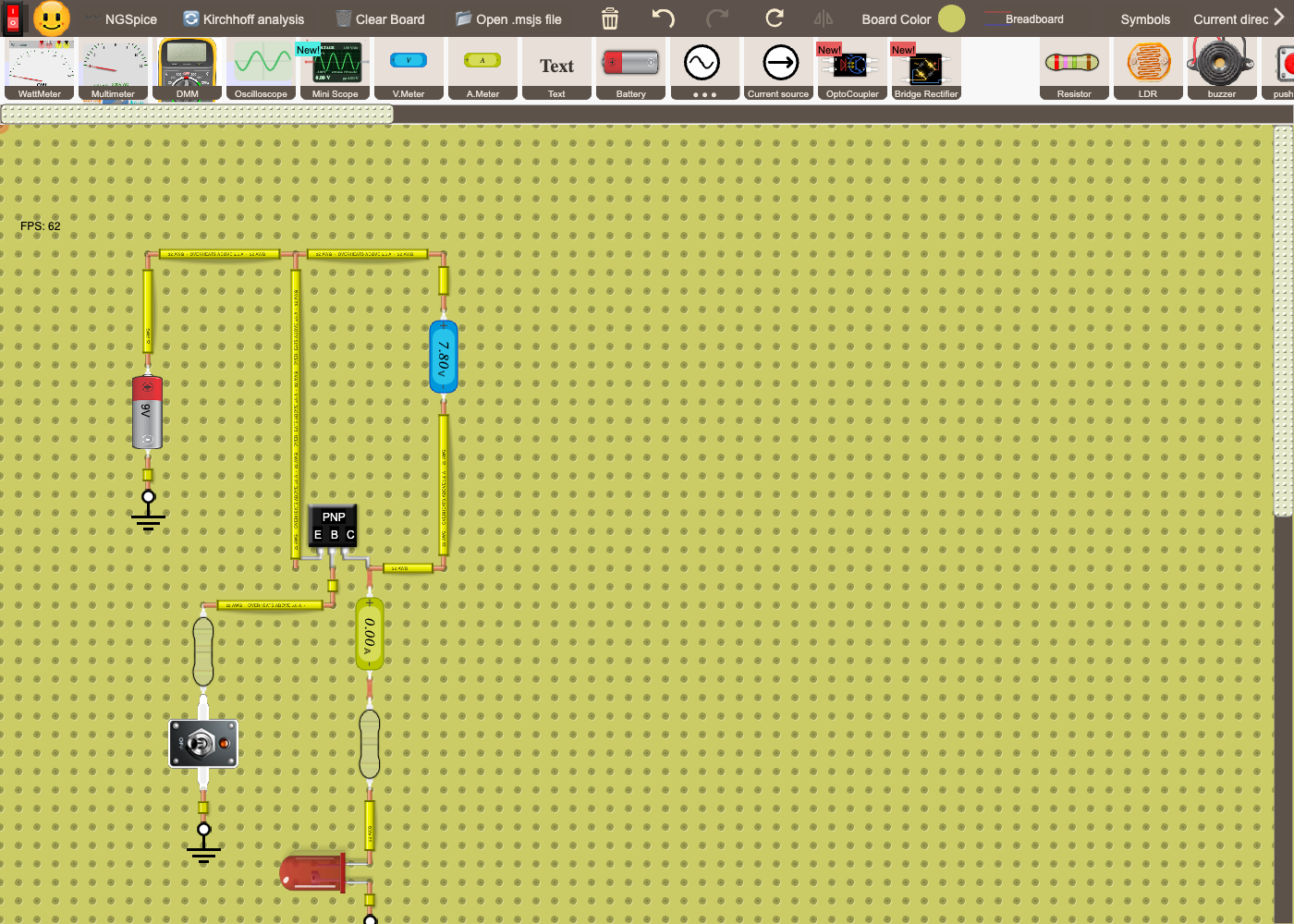
A PNP transistor switches a red LED on the high side of a 9 V battery. Close the switch to pull the base down and the meter jumps from 0 to about 14-16 mA.
Learn to use a multimeter, with circuits you can measure
Learn how a transistor switch works, with circuits you can try
Want to build your own circuit? Start a new circuit in the circuit simulator
Teaching with circuits?
Create a classroom, give your students a circuit to build, and review what they submit. Try it free with one classroom and up to 5 students.
Try the free classroom demoHow it works
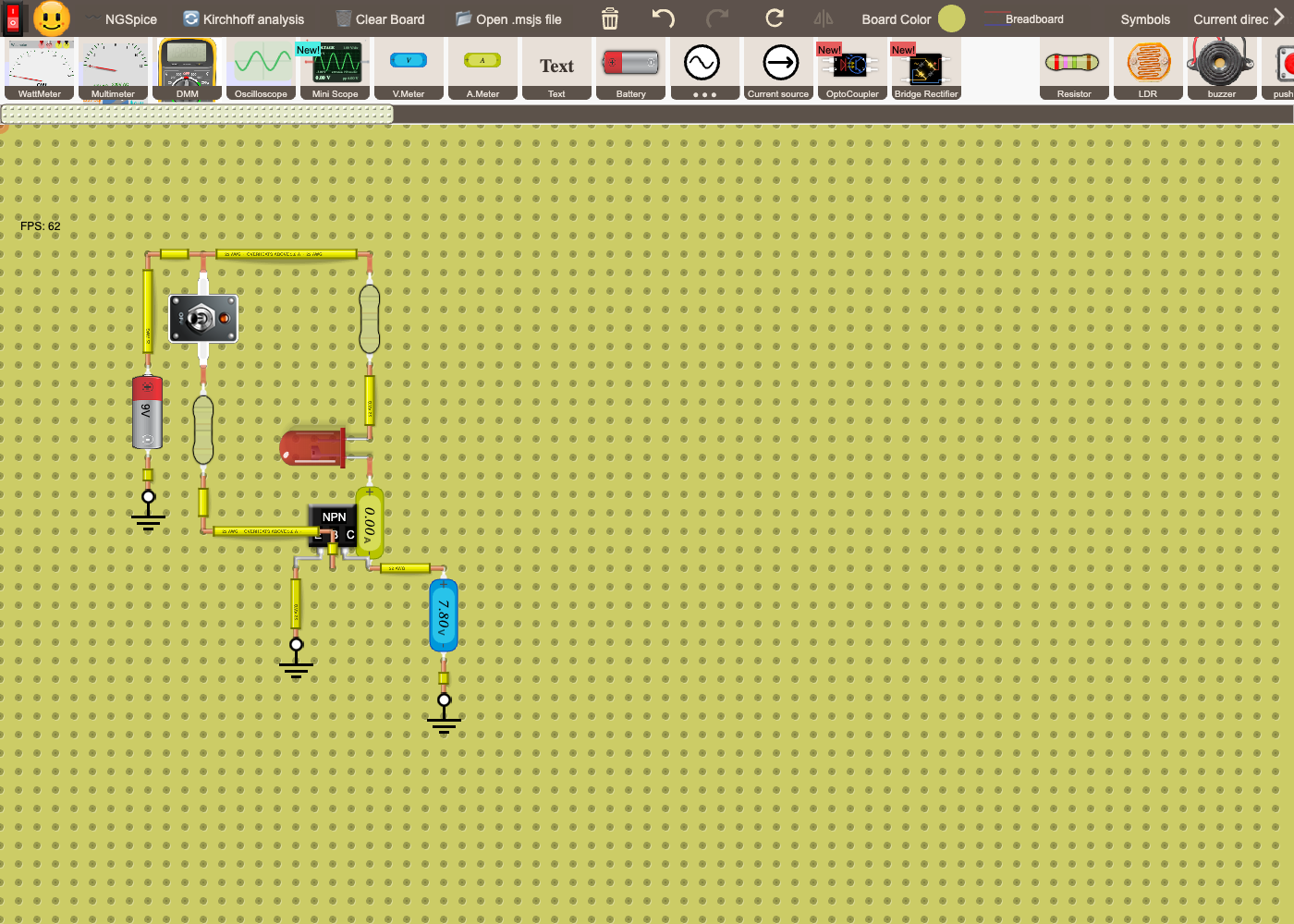
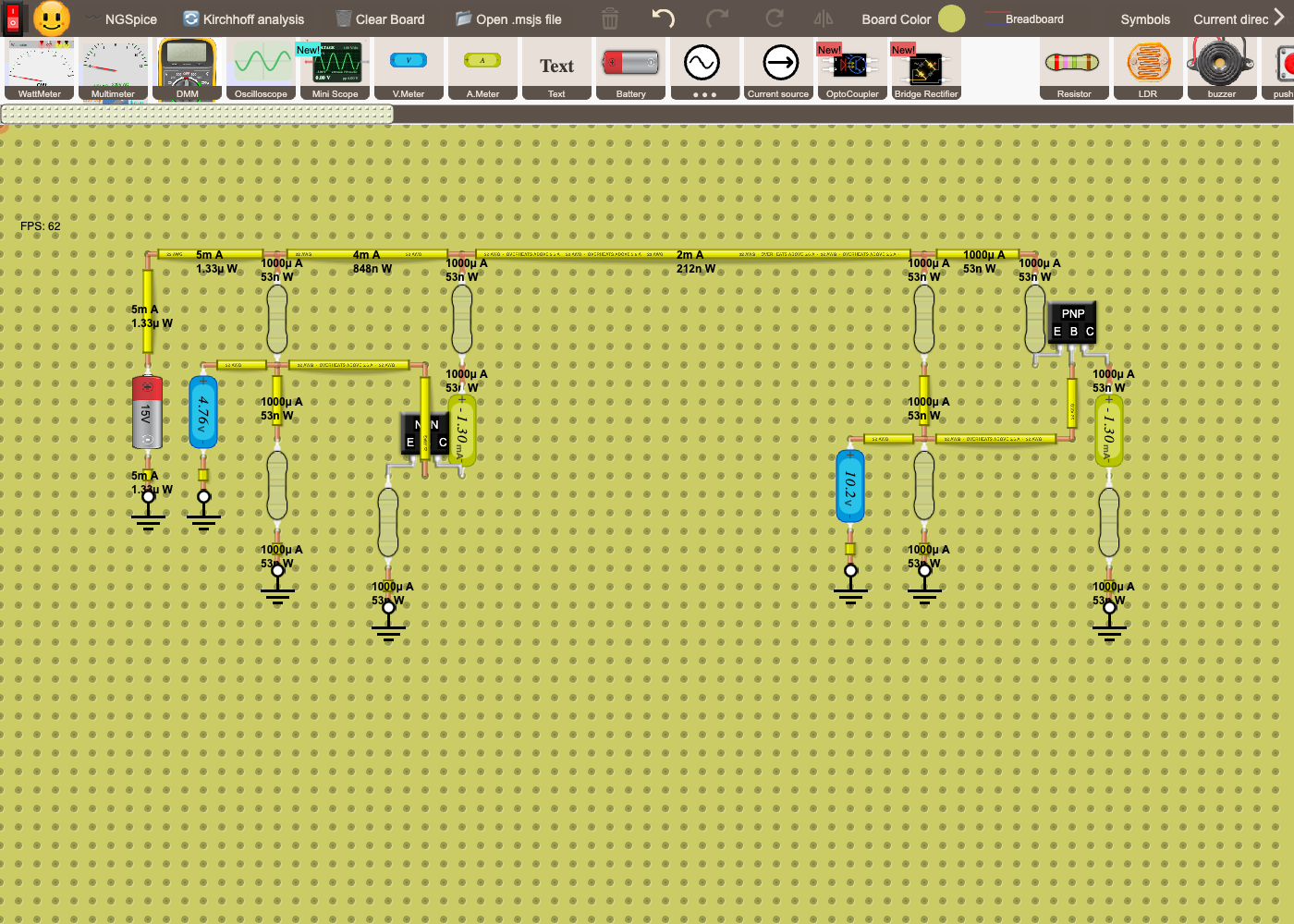
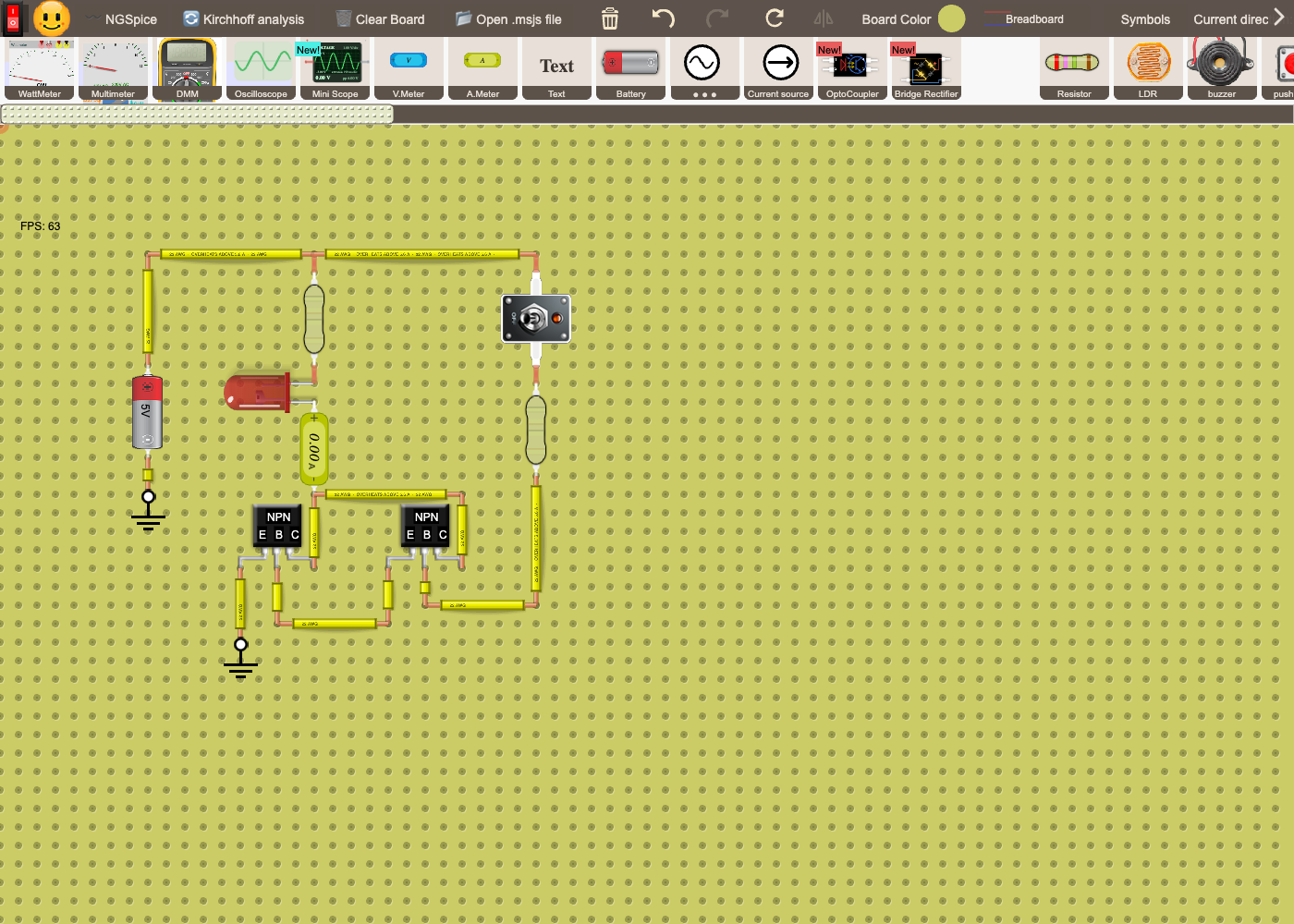
The emitter goes to the battery's +; the collector feeds the ammeter, the 470 Ω resistor and the LED to ground. The base goes through 10 kΩ and a toggle switch to ground, and a voltmeter reads the voltage from emitter to collector. With the switch open no current leaves the base, so the transistor is off and the ammeter reads 0.
Close the switch: current flows out of the base, the transistor saturates and the meter reads about 14-16 mA, with less than 0.1 V from emitter to collector. It is the NPN low-side switch turned upside down: same load, same current, but the base is pulled down to turn on.
What's inside
- 1× Battery
- 2× Resistor (470 Ω, 10 kΩ)
- 1× LED
- 1× Transistor
- 1× Switch
- Measured with Voltmeter/Ammeter