Laboratoire

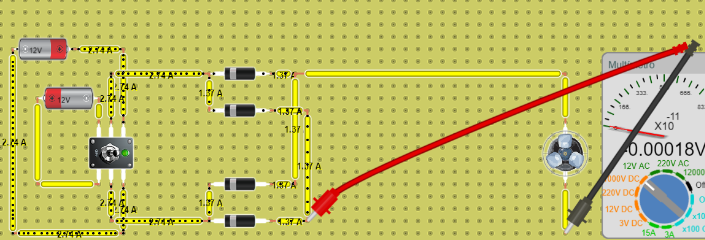
Using 'bucking' batteries: The voltage of the smaller battery is subtracted from the larger battery and the positive end of the smaller battery becomes the negative end of the two. This really works.

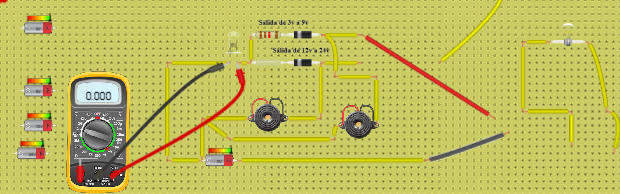
An interactive diode, battery and lamp circuit built in the DCACLab online simulator by Sam Watson. Open it to run the simulation and measure it.

Preview of Using 'bucking' batteries: The voltage of the smaller battery is subtracted from the larger battery and the positive end of the smaller battery becomes the negative end of the two. This really works.
Open in the lab Embed The simulation runs as a demo that pauses after two minutes; open it in the lab to keep going.

Teaching with circuits?

Create a classroom, give your students a circuit to build, and review what they submit.

See classroom plans

What's inside

  • 2× Battery (1 V)
  • 1× Diode
  • 1× Lamp
  • Measured with Multimeter

Tags

About

By Sam Watson
Saved July 10, 2014 · updated January 15, 2026
5,677 views
Page: dcaclab.com/circuits/9983-using-a-car-battery-and-two-aas-to-make-a-9-volt-battery

Embed this circuit

<iframe src="https://dcaclab.com/experiments/9983-using-a-car-battery-and-two-aas-to-make-a-9-volt-battery/iframe" width="560" height="410" frameborder="0"></iframe>

Cite: Watson, S. (2014). Using 'bucking' batteries: The voltage of the smaller battery is subtracted from the larger battery and the positive end of the smaller battery becomes the negative end of the two. This really works. DCACLab. https://dcaclab.com/circuits/9983-using-a-car-battery-and-two-aas-to-make-a-9-volt-battery

Related circuits