Measure Voltage with a Multimeter: 10 V Across Two 1 kΩ Resistors
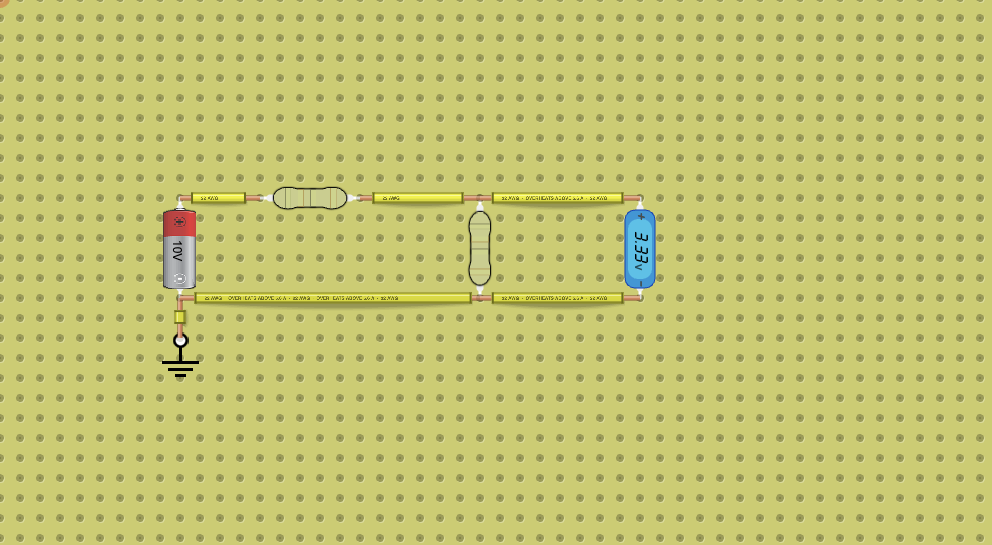
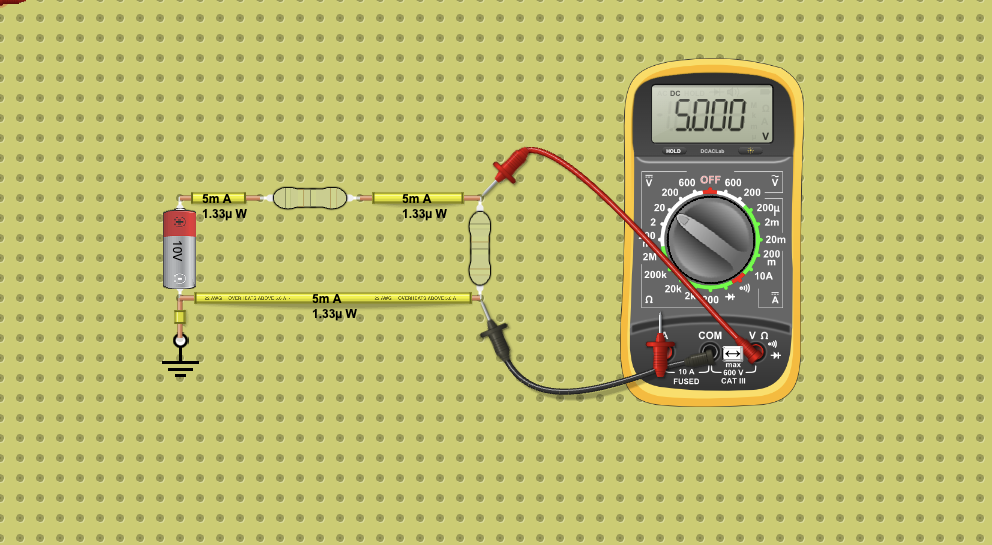
A 10 V battery drives two 1 kΩ resistors in series. The multimeter on its 20 V range reads 5.000 V across one of them. Turn the dial or swap the probes.
Learn to use a multimeter, with circuits you can measure
Want to build your own circuit? Start a new circuit in the circuit simulator
Teaching with circuits?
Create a classroom, give your students a circuit to build, and review what they submit. Try it free with one classroom and up to 5 students.
Try the free classroom demoHow it works
A 10 V battery drives two 1 kΩ resistors in series, so each resistor drops half the voltage: 10 V × 1 kΩ / 2 kΩ = 5 V. The digital multimeter is on its 20 V range with its probes across the right-hand resistor, red on the more positive end, and reads 5.000 V.
Turn the dial to the 200 V range and it reads 5.00; on the 2 V range it shows OL, because 5 V is over range. Swap the probes and it reads -5.000. Change the right-hand resistor to 2 kΩ and it reads 6.667 V.
What's inside
- 1× Battery
- 2× Resistor (1 kΩ)
- Measured with Multimeter